Page 3 of 5

I’ve been frustrated by the lack of spaces that exist for queer men to talk about their sexuality in meaningful ways. Often times these are dominated by formal scientific or academic language or, if dominated by the personal, it fails to adequately capture sex we’re having now and sex we want to give in ten years from now. Historical analysis and nostalgia for the kinds of movements and communities we had are warranted. But what about people like me, under the age of 35, who have grown up largely post-AIDS, whose sexuality has almost entirely been tied to digital technology?

Enter the Annals of Gay Sexuality 2015:
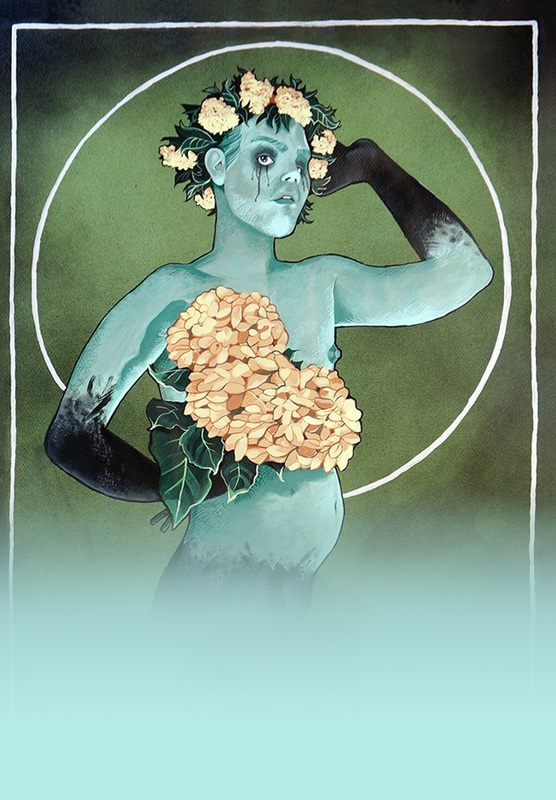
annals_of_gay_sexuality_cover

Image: Zeitgeist (modified) by Pablo Cáceres

As they say:

AGS contributors expose the present-day tastes, textures, sights and smells of our sex, from the mating rituals at a group sex potluck to sexting between cis- and transgender bears; from mile-high club poetry about Patient Zero to pillow talk between friends who are untangling sero-discordant envies. Both heart-breaking and hair-raising, these authors and artists whip it out and make us gag on our HIV-saturated gay lives and in the process evoke frothy new cultural and sexual paradigms.

I’m interested in the mix between the high and low brow, between stories that might be more conventional and others that push the boundaries of sexual ethics and gender identity in playful way. It’s also unapologetic in its sexuality, almost in a campy way. The body gets centered in discussions on sex, which should be a obvious, but this often isn’t the case. Getting lost in abstraction or totally removing “I” from the equation is all too common.

I’m definitely going to be submitting a proposal for the 2016 edition. (The proposals are due on December 1st, though earlier submissions are always welcome.) I want to look at having sex in a global sexual culture. How can we navigate and respect differences in terms of country of origin, race, class and the access to sexual health services? Why is there an inherent power in these sexual experiences? And what, exactly, is it that we discover through travels and traversals of identity?

If you have any idea, big or small, I’d encourage you to submit as well. Getting a chance to experiment and collaborate with others on these topics is a rarity, so get on it while you can! Feel free to share your thoughts and ideas below as well, even if you don’t think you’ll submit anything.

Introduction To Social Innovation Methodology

When I started in the SIS program, the concept of “social innovation” in relation to Our Viral Lives felt like an unnecessary abstraction. I remember at one point even considering switching out of the SIS concentration because I felt my work didn’t “fit in” to the mold of a social innovation project. But the more I started to concretely plan out Fall 20015—both in regards to launching new programming and also solidifying travel plans in South Africa— I realized how clearly I was doing something that was in fact innovative and was focused on making a social, political and historical impact on discourse around HIV/AIDS for LGBTQ-identified people.

To make sense of the potential social impact and innovation of Our Viral Lives, it’s necessary to consider three different elements of the project: content, design, and method. They are all interrelated but they serve to highlight unique components of social innovation discourse.

Read Full Article

I’ve known since the beginning of the year that I would be going to Mexico City and South Africa but I haven’t know what I’m doing. Finally, I’m excited to announce a more concrete plan of what I’ll be doing and offer a little insight into the process. All of this has been a while in the making, but I’m happy to finally be going somewhere and setting myself up for a lot of exciting things to come.

Read Full Article

I feel like living in a world and talking so openly about queer sexuality and HIV/AIDS leads to a constant sense of alienation and disconnect. But what could happen if there was an easy, visual way to showcase that people living with HIV, who have experienced the loss of someone with AIDS, are on PrEP, or otherwise are confused about which sexual health services cater to LGBTQ-identified people? It seems like some of the silence, stigma and sense of disconnect could be lessened.

As I started to think about what Our Viral Lives could do, I again gravitated toward the idea of using digital tools. Having something that can be easily accessed around the world would allow more people to connect more easily, and thus the “Sex Without Boundaries” map was born. The idea is that if you’re poz, if you lost someone to AIDS, want to mention you’re on PrEP, or have a sexual health resource to share, you can.

This map will serve to build up more and more people over time to highlight the idea that we’re not alone, that there are people who share in our experiences, and that we can be empowered in our own communities to discuss sexuality and HIV if we haven’t already. Currently, anyone can reach out directly to Our Viral Lives at kyle [at] ourvirallives [dot] org to get added to the map. You can also send out a tweet here. All you need is your first name last initial, age, gender and/or sexual orientation, and HIV status, if you’re on PrEP, and since when.

(And if you have any other questions, don’t hesitate to reach out directly.)

2015 has been such a transformative year for me sexually, in ways that I hadn’t expected. There was a lot of rush earlier in the year to make Our Viral Lives into something bigger than it could yet become. In taking a step back, I think I found something far more powerful in the project: to bring pleasure, desire and creation to the forefront of a project on HIV/AIDS. This letter responds to that.

==

Dear Ghost,

I write this letter to you, at this moment in time, to let you know I’ve left you for good. I write this letter to you, now, because I’m done letting you do what you want to my body. I’ve started this thing where I claim ownership over my desire, and it’s so much better than worrying about always disappearing into your image.

I understand why you’re here. I’m grateful and humbled by your presence. You commemorate millions of dead from AIDS, and millions more who have HIV living under terrible stigma. But you also always embody the worst kind of fear. A fear so consuming and debilitating that I could never get close to anyone without worrying I would become you.

However, I am not you. 2015 marks a year of possibility, however finite and measured that possibility might be. For myself, I’ve had to confront some uncomfortable truths recently. I just realized this year was the first I had sex with an openly poz guy. Now I’ve had sex with three different poz guys on multiple occasions. Why hadn’t I had sex with them before?

I wasn’t avoiding them consciously but I think it was buried in my thought process that I would turn into Uncle Jimmy. That I would, somehow, end up a half-machine in a hospital bed, gasping for life, ready to turn into you, the statistic, you the slut, you who brought your death upon yourself. But all of this now seems so absurd. It seems so wrong. I betrayed your memory. I betrayed my body. I was living a life of betrayal.

It’s not easy to let go of any of this. It’s not easy to recognize the potential power my body has, but it’s happening. I fuck more freely. I fuck to connect, not to escape. I fuck because it helps me find a purpose I never knew I could experience. You always wanted to make this experience about remembering. I choose now to make this experience about the future.

I understand consent in a way I hadn’t before. Consent is mutual. Consent is an act of shared recognition of our power. And you were denying me the opportunity to recognize that. When I fuck and have conservations with other men about fucking and our bodies turn into blunt objects, ready to tear apart shame and stigma, I’m so present. It’s hard to always be in this state, to be present, but it’s imperative if we ever hope to change anything.

It’s not that I don’t see you or recognize your presence anymore. It’s that you’re not my bedfellow any longer. You’re there in this archive. You get close to me sometimes, but your touch is lightning fast now. You will back away because you’re afraid of me now. You should be afraid of us, this moment undressed, this growing movement, possibility that hasn’t existed in a long time.

All I wonder, as I write this to you, as I think about my own failures in the past to recognize the powers and potential of pleasure, is how others can find that like I have found? How can I get others, beyond the men I fuck, to join with me? There’s no easy answer, but that’s part of the excitement of it, of creating this embodied archive. With each cumshot and moan and orgasm, it becomes a richer tapestry of desire.

I’m also starting to realize it doesn’t know where it ends because there isn’t any end. My tote bag says, “Let’s hold each other until it’s all over.” But it’ll never be over, not in the conventional sense that HIV will be gone out of every fold of our body. And that’s OK because under my terms these future embraces nourish and sustain, unlike what you were ever able to provide to me.

-Kyle

The following plan is a tentative look at what my 2nd semester will look like for my Master’s program. This will help to shape the future of Our Viral Lives as a project.

==

Packet 1 Deadline – September 7

social_innovationMajor objectives

  • Articulate social innovation as it relates to narrative and archives around HIV/AIDS
  • Complete final version of social innovation and sustainability essay

Resources

Packet 3 Deadline – October 19

AIDS_sign_in_Tanzania

Major Objectives

  • Host 1 event in NYC — ideally related to using photography as a documentary, narrative and archival tool in LGBTQ communities
  • Research more cross-cultural perspectives on HIV/AIDS to prepare for my upcoming travels to Mexico City and South Africa
  • Solidify contacts in all travel locations and find out more about archival materials and community organizations
  • Continue connecting with HIV/AIDS within NYC in a variety of contexts, to further refine social innovation and articulate possible future archival strategies

Resources

Packet 5 Deadline – November 30

5550349271_834a5054c5_b

Main Objectives

  • Collect at least 7-10 written interviews (and find appropriate translation services when necessary)
  • Create an extended hybrid essay that combines autoethnography, archival research and more formal scholarship that focuses on at least 1 location that I traveled to
  • Create a tentative thesis statement to prepare in advance of G3 semester

Resources

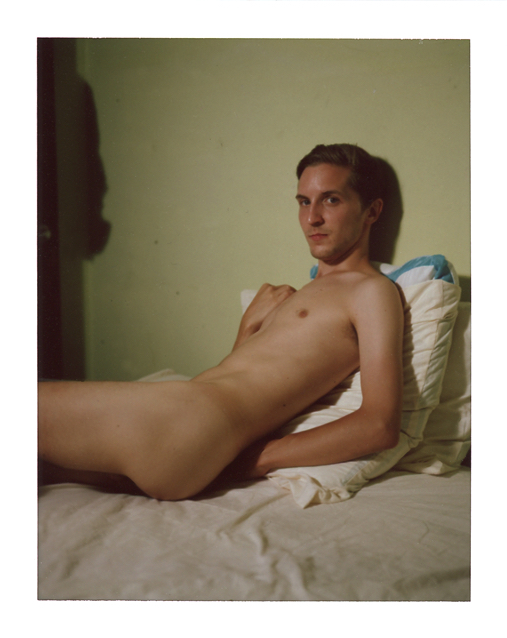
kyle_bella_recliningbefore he clicks the shutter on the camera all of the muscles in my face relax, even though my body is contorted (this shot took what seemed like 20 minutes to compose), & i let myself go because i wanted to be captured in a state of abandon, like i was free for a moment at least, free from what though or who, i can’t quite tell, but i wanted to be looking at him, not the camera lens, i wanted to welcome him closer to this version of me.

in retrospect: who is this person i’m looking at? am i a 70s pinup figure? if so, in 10 years time would i be dead with aids? is it morbid to always think of aids? i can’t help it, though, when the image that is created screams QUEER PHOTOGRAPHY 1970-1985, & doubly so when that curvature of my ass welcomes somebody’s cock. come inside of me right now i seem to suggest & for the first time in my life i don’t feel guilty.

it’s odd not feeling guilty. my whole life i’ve felt guilty about sex, my body a wasteland, space when i could be fucked into oblivion, because I bore, invisibly, the scars of queer erasure & death & aids, always there, aids that jumped from the art books i read, the plays i watched, the men i met, but still hush hush, our culture one stern daddy telling us not to talk about those things, the very things that were killing all of us, whether physically or psychologically.

but then the camera shutter i anticipated clicked — “keep your eyes open,” he said just before this moment — & i was no longer erased.

every muscle loosened up, collapsing into the oblivion of my own making, 70s pinup, a sex symbol not giving a single fuck about aids for a second, undressing the object of my desire with soft cerulean eyes: would he put his tongue in my ass? would we make each other moan? would we? what can we do now? what will we do? done?

i wish everyone could feel this kind of rapture in their body. but it’s 2015, so i know how difficult it is. i wish we could all just get rid of fear, false ideologies & mythologies of aids. i wish we could lust & love each other better, not shame those on the front lines of this epidemic doing what they can to minimize risk. i wish we could all feel comfortable connecting with poz artists, lovers & culture makers who are giving us insights into leading sex positive, stigma-free lives.

when i look at this photograph again & feel every muscle loosen up in my body, i think about what i’ve only begun doing to be a better sexual being, to be better to myself because i’m confronting & transcending death through my presence. i probably would have died have been alive in the 70s. but i wasn’t alive then. i was born into a time and moment when i have a capacity to confront the real problem in society: the figures telling queer men to hush hush & worry about “deception” from those people living with hiv.

part of my manifesto (if you can call living a manifesto): i will continue to bare it all for the photographic lens, for the photographer himself, for him, whoever he is, because my body is, ultimately, the most powerful force on the frontlines of this epidemic. i will let you turn your eyes toward me if you’re willing to let your guard down, at first, & maybe eventually let it go.

as a logical progression: undress me. let me undress you. come closer. come…

On Saturday, March 7th, Our Viral Lives hosted its launch event, “We Are Here” at The Bureau of General Services- Queer Division. Four under 30 activists (Kia Labeija, Martez Smith, Mathew Rodriguez and Charlie Ferrusi) were invited to speak about their personal relationships to HIV/AIDS and their activist work to a full audience. I wanted to provide a summary of the evening and offer a few thoughts about moving forward.

Read Full Article

I want to believe, above all else, that I’m invincible. 1982: 618 dead But that would require distorting the reality of our times. 1983: 2,118 dead As I go through and begin cataloging dead bodies, I start wondering why I’m still alive. 1984: 5,596 dead What are some of the names of these men? I don’t really know, except that Foucault died this year, but he’s not American. 1985: 12,529 dead These unnamed men, aberrations like me, but not quite, because I’m still alive. My body isn’t killing itself.

Read Full Article