
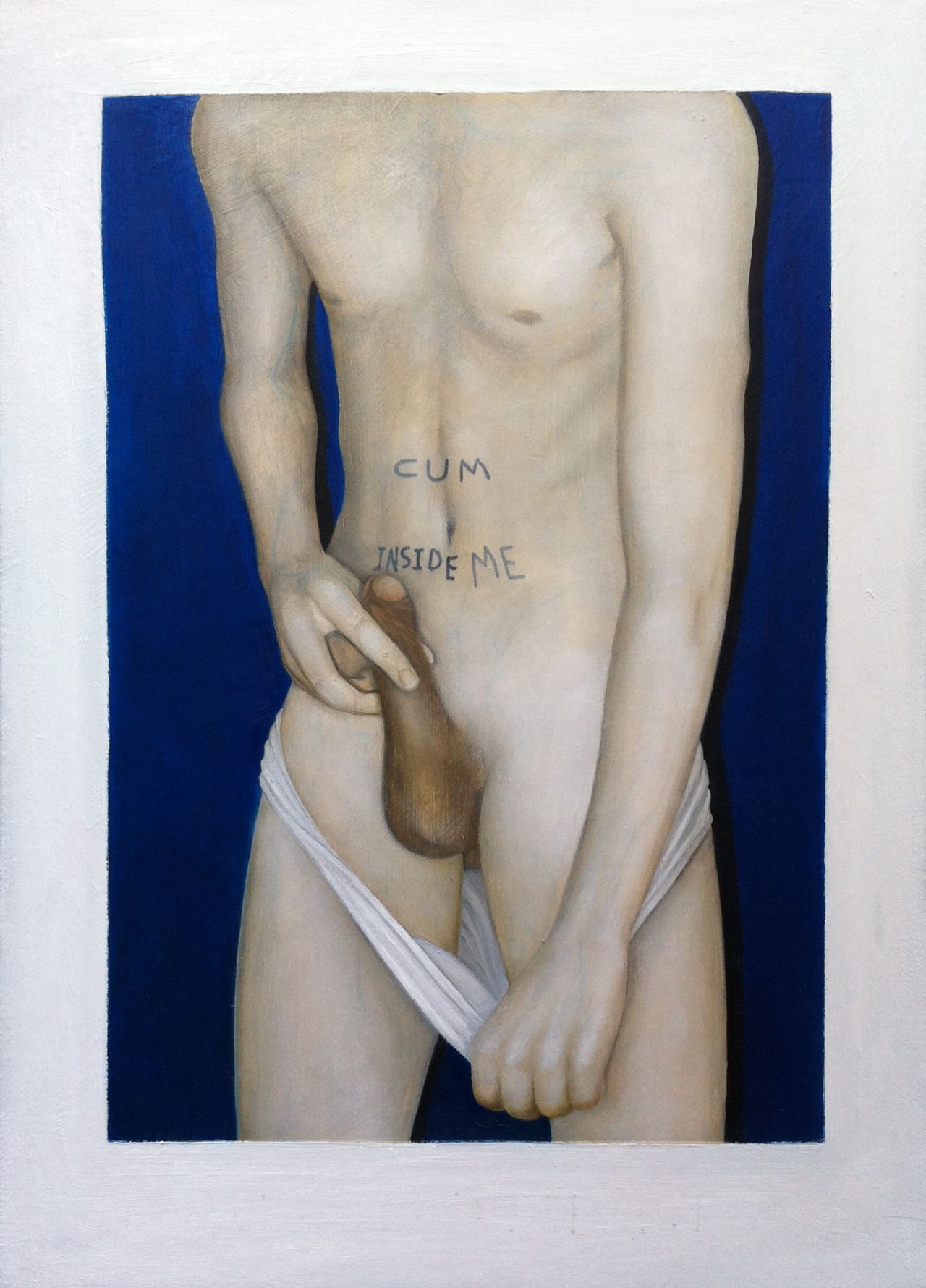
Francisco Hurtz, “man as sexual object” (2014) – reposted with permission
==
In his own words: “I think this artworks talks for itself… It’s about turning men vulnerable as woman have been for a long time.”
Francisco Hurtz, “man as sexual object” (2014) – reposted with permission
Today I went to get my quarterly HIV test to renew my Truvada (PrEP) prescription. It was the first time in my life I’ve ever had gotten an HIV test using another HIV prevention tool other than condoms. There’s always some thought in the back of my mind that I could get HIV because I know that not having sex with a condom will possibly give me HIV. This has been ingrained since I was a middle school student. But I did feel more at ease and, as a result, I started to think more about what’s worried me and just how much I’ve grown.
I don’t think there is a whole lot more that I can say about Ferguson that hasn’t been articulated before. I do, however, think that the disregard for black lives extends to another arena: HIV prevention and treatment. A 2010 study from the CDC yielded shocking results. Among men who have sex with men (MSM), black men accounted for 39% of all new infections, and those ages 13-24 accounted for a particularly high percentage of the new cases. In 2011, the CDC launched a “Testing Makes Us Stronger” campaign that I interviewed a then-director about. Despite progress at the federal level, locally and statewide, there has been a disregard for more diversity in HIV/AIDS prevention, treatment, and education.
When I was in Barcelona over the summer, I was doing a month-long residency at MACBA, one of the most prominent art museums in all of Barcelona. Not only do they have a strong collection of queer theory, but they also have reproduced a Keith Haring mural on the outside ground of the museum in a plaza area usually overrun with younger skateboarders and diners enjoying a sunny afternoon tapas lunch. It seems like an odd place to put a Keith Haring mural. Who sees it, you wonder. But then you realize that as an artist, Haring tried to make conversations on HIV/AIDS more democratic without sacrificing the frenzied urgency of his life about to end.
In this sense, I consider Keith Haring a major influence and a key figure in shaping this new project. We must try to work across difference as queer men in our conversations surrounding HIV/AIDS if we can ever hope to make any inroads in new infection rates, better access to treatment, and to the feelings of stigma and fear that perpetuate a lack of dialogue on sex positive practices. While it’s hard to be a Keith Haring, to have that kind of cross-cultural influence, he’s a reminder than we can do better. More importantly, that we have to, in order for any kind of substantial change to happen.
 Our Viral Lives